 I managed a department in a large suburban hospital in Houston for eight years followed by another long stint working for the Corporate Offices. The Medical Staff was knowledgeable, professional and committed to providing the highest possible quality care. I greatly enjoyed working with most of them.
My favorite physician, an internist and cardiologist, was a big bear of a man, a natural leader, the unofficial conscience of the Medical Staff and the favorite of the Medical and Nursing Staffs. He loved a funny story, and he loved helping others. He once spent a raucous half-hour describing a long Sunday night treating a patient’s sick parakeet over the phone.
Another night, one of his patients drove into the hospital parking lot and staggered into the ER. His chief complaint was, “Bad night in Nacogdoches.” With timely treatment, the patient survived a nasty case of food poisoning.
If my friend had an off-color joke he wanted department employees to hear, he would sit in a doctor’s dictating booth with his back to the main workroom, call a physician friend and tell the joke to him loudly enough that everyone present could hear. He was old-fashioned and would never tell a dirty joke to ladies.
He routinely reviewed patient records in the department and dictated DISCHARGE and DEATH SUMMARIES. Often, he would mutter under his breath, “Poor old Mr. So- and So-.” It pained him to lose a patient. He didn’t lose many, but he did lose the Nursing Administrator of the Cardiac Care Unit. Along with many others, I worried that her death would kill him. I don’t think he ever got over it.
At the height of his career, he suffered a massive heart attack. He coded, and emergency CPR had to be administered. We all feared he would die, but he eventually pulled through. A few weeks after he returned to work, he told me that while so very ill, he suffered an out-of-body experience. He was a very learned man and a scientist. Like me, he was probably skeptical of reports of such experiences before it happened to him. He described floating upward and hovering just below the ceiling in his ER treatment room. The CPR team was working on his body below, lying on the gurney. His body was clinically dead… no heartbeat, no respirations, pupils fixed and dilated. They shocked him with the defibrillator numerous times before they finally got him going. Then he floated down from the ceiling and re-joined his body on the stretcher.
He spent another fifteen plus years practicing medicine, but a second heart attack took him. His mourners were legion, city-wide. Everyone missed him.

 I attended a week-long professional meeting in Boston many years ago. Chocoholic took vacation and went with me. It was a lovely trip, steeped in history. I love old things and old places and the history of our great nation, and Boston certainly met expectations.
 Chocoholic and I once took our family to the UK for two weeks of sight-seeing. My mother and my maternal aunt by marriage went with us. I planned the trip, including transportation. We flew to London and then travelled by train, tube, ferry and bus.
 My use of her nickname is presumptuous. I did not know her. I knew OF her. I could have secured an introduction had I wanted, but I didn’t.
 Nick Riggs, a principal character in my book PIG PARTS, is a freshman at the University of Texas, a large, outgoing, good-looking young man, a varsity swimmer majoring in pre-law. He’s attracted to Bess from the get-go and pursues her, ensuring they end up partners in Biology Lab where they dissect a fetal pig. He grew up in the industrial northeast, a cheerful, confident, ambitious young man. Although he’s a year younger than Bess, he enjoys familial resources and enhanced opportunities and has gained a depth of experience in the world greater than our small-town girl.
 The Austin Chalk is a geologic formation running through the middle of Texas and into Louisiana. When drillers began producing oil and gas from this formation in Central Texas, some forty or so years ago, my aunt’s second husband, principal of the local elementary school and long-time farmer and rancher, told my mother and me of a conversation he had with another local landowner about oil & gas royalties. Landmen were signing up landowners as fast as they could, leasing access to oil & gas deposits on the owners’ lands.
 MOCKINGBIRD SUMMER: My neighborhood book club recently read MOCKINGBIRD SUMMER, a novel by Linda Rutledge. I enjoyed it, but internet reviews were somewhat mixed. Some readers had not expected the book to have a strong YA influence. The principal narrator is a thirteen year-old tomboy, a white girl, and I can’t see how it could have been nearly as authentic without the YA influence. A few reviewers did not think that the novel was tied closely enough to Harper Lee’s novel, TO KILL A MOCKINGBIRD. The setting is small-town Texas in 1964, still under the influence of Jim Crow. Corky makes a new friend with a sixteen year old black girl and naively recommends Ms. Lee’s book to her. Their budding relationship is further complicated when her new friend is encouraged to join a white girls church softball team. From my perspective MOCKINGBIRD SUMMER explored many of the same themes and concerns that TO KILL A MOCKINGBIRD had done decades earlier. I related to the book because it shares similarities with my first novel, PIG PARTS, particularly the setting and the time frame.
 Like many others who follow business news these days, I read about the exploits of South African born mega-billionaire and entrepreneur Elon Musk. He enjoys a reputation as being very smart but has recently come under criticism for damaging his electric automobile brand. He got involved in partisan politics and failed to pay adequate attention to business responsibilities. Sales went down. Inventories stacked up, and investors worried. Some owners resorted to posting written apologies on their cars for having purchased TESLA, hoping to ward off angry vandals.
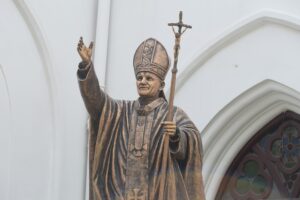 Pope Francis died April 21, 2025. He was 88 years old and had been very ill for a long time. He was known as “The People’s Pope,” and many videos of him blessing sickly children have been playing on TV. His funeral was conducted in late April, and the Conclave to elect a new Pope begins today.